
Seasonal · July 2026
Monsoon Season Roof Prep: A 15-Minute Owner's Checklist
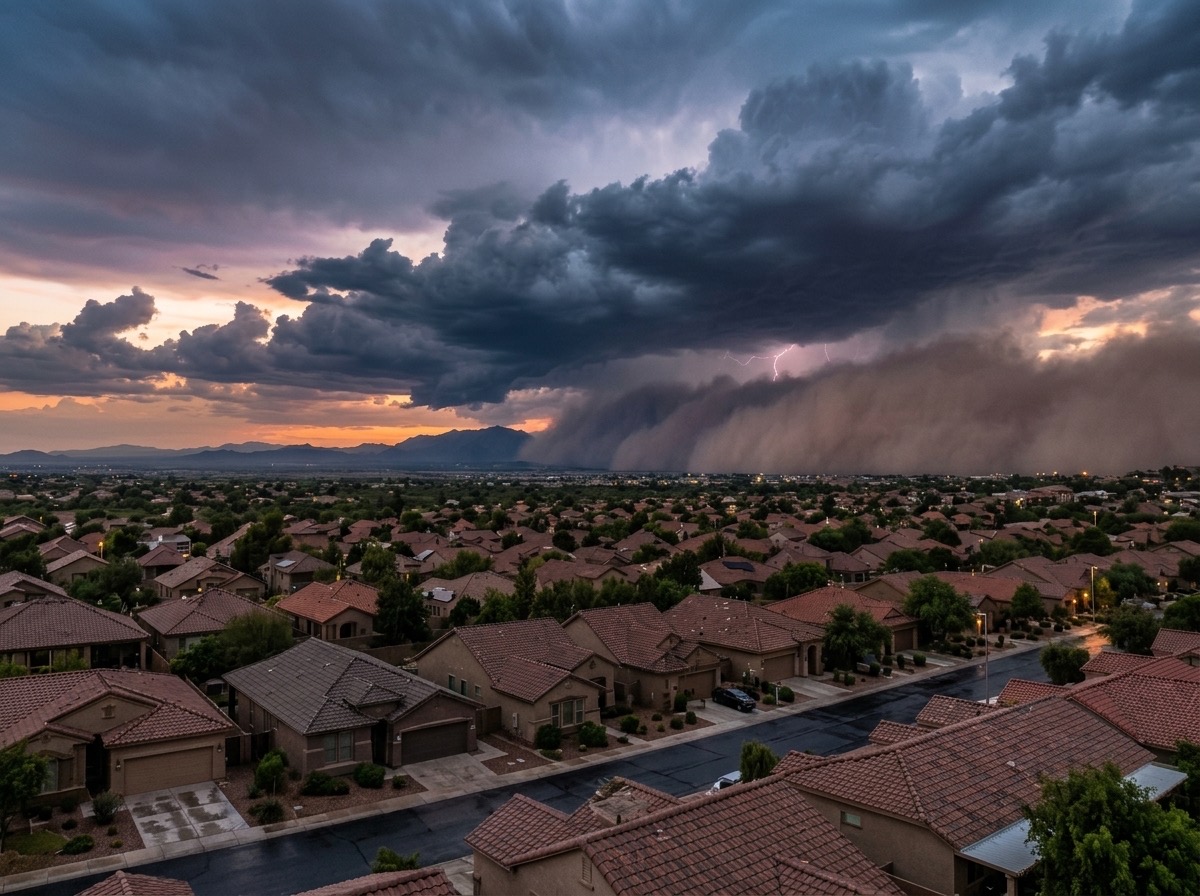
Monsoon storms do not create roof problems so much as find them. Wind-driven rain pushes water into places gravity never touches, and a small weakness that survived all spring becomes a ceiling stain by August. Fifteen minutes of looking, from the ground, tells you most of what you need to know.
From the yard
Walk the perimeter and look up. Cracked, slipped, or missing tiles. Shingles with curled edges or bare spots where granules used to be. Debris sitting in roof valleys, which dams water exactly where the roof is most vulnerable. Any daylight visible under ridge or eave lines.
At the edges
Check that gutters and downspouts are clear and actually attached. Look at the flashing where the roof meets walls, chimneys, and vents. Flashing failures are a top source of monsoon leaks because sideways rain exploits gaps that vertical rain never finds.
Inside the house
Scan ceilings and closet corners for stains, even faint ones. Check the attic if you can get to it safely: water marks on the underside of the deck, damp insulation, or a musty smell all mean water is already getting in.
Flat and foam roofs
If part of your home has a flat roof, ponding water that lingers more than a day or two after rain, soft spots underfoot, or a chalky, eroded coating are all signs the surface needs attention before the next storm, not after.
What to do with what you find
Anything on this list is worth a professional look before the next storm cell builds. Roof inspections are free, and fixing a flashing gap in June costs a fraction of chasing a leak through drywall in August. If a storm has already hit, document everything with photos before cleanup. It matters for insurance.
Storm coming, or storm damage already done? We handle the inspection and the insurance documentation.
Request a Quote Call (602) 802-8795